Herniated Discs
Learn about herniated discs including symptoms, diagnosis methods, and treatment options from conservative management to surgical interventions.
Herniated Discs: Symptoms, Diagnosis, and Treatment
Introduction
Disc herniation is a common condition resulting from movement of one of the connective tissue cushions that help separate the bones of the spine and protect them from injury. Notably, many individuals with herniated discs are asymptomatic, with prevalence rates ranging from 29% in 20-year-olds to 43% of 80-year-olds. In those with herniated discs, 2-4% will present with symptoms of nerve compression requiring the attention of a healthcare professional (1). This article provides a basic overview of some symptoms associated with disc herniation, the process of diagnosing disc herniation, and treatments available to help heal your spine.
Understanding Herniated Discs
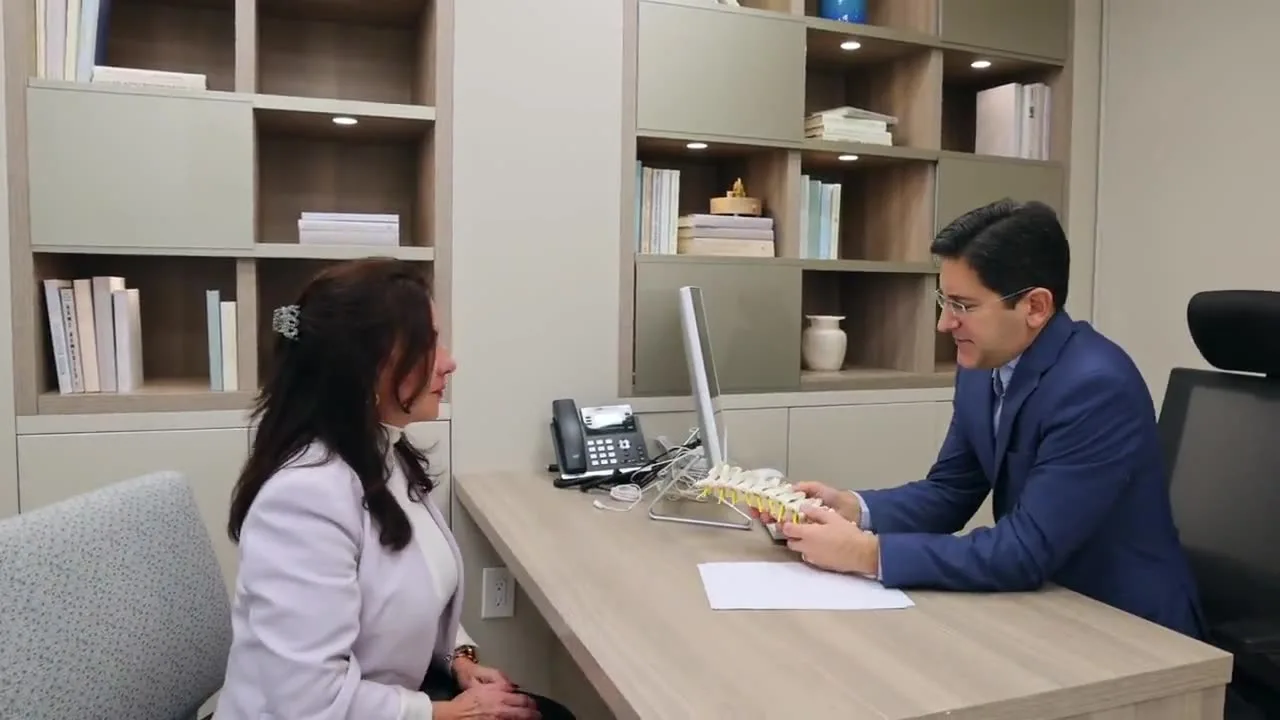
Watch this educational video to learn about herniated discs, how they develop, and how they may cause pain and other symptoms.
Symptoms
Though the majority of patients with herniated discs show no symptoms, those with symptomatic herniations most often report midline pain in the lower back, though the exact location of back pain typically lines up with the disc that has herniated. Other symptoms that can accompany back pain include (2,3):
- Sciatica (shooting pain down the leg)
- Pain radiating to the leg
- Numbness or tingling in the extremities
- Loss of strength/muscle coordination
Some patients with disc herniation may exhibit "red flag" symptoms that suggest progressive disease requiring immediate medical attention. These include:
- Loss of bowel/bladder control
- Numbness/tingling of the genitalia/anus
Diagnosis
As herniated discs do not always cause pain, many patients receive the diagnosis of herniated disc incidentally while being worked up for other conditions. Nonetheless, those with symptoms suggestive of disc herniation (mid-line back pain, signs of nerve compression, etc.) may benefit from a medical workup to determine the cause of their pain.
Healthcare providers will often begin with plain radiographs (X-rays) to get a basic picture of spine anatomy and determine whether or not a herniated disc is present. Notably, many patients may have signs of disc herniation on imaging, though the diagnosis is typically only made when the location of herniation correlates with the sites of pain, weakness, or changes in sensation. Further imaging studies like MRI and CT are sometimes warranted in cases where steroid injections or surgery are being considered.
Treatment
First-line treatment for patients with symptomatic herniated discs is conservative management involving the use of over-the-counter medications for pain control (NSAIDs), physical therapy, and activity as tolerated. In patients with pain persisting beyond 4-6 weeks, epidural steroid injections can provide short-term pain relief but do not reliably show improved outcomes over longer periods of time.
In patients with severe or progressive symptoms not responsive to conservative management, spine surgery is a strong option. Though many approaches can be taken, most often, herniated discs requiring surgery will be treated with one of the following:
- Microdiscectomy
- Laminectomy
- Spinal Fusion
For more information on these procedures, please click the bullets above to navigate to our "procedures" section. Those with progressive symptoms or pain not responding to other treatments should discuss their treatment options with a licensed healthcare professional to determine what options are best for them. If you have the symptoms above and have not been able to get relief, talk to your primary care physician to see whether a consultation with a spine surgeon may be helpful.
MRI for Spine Conditions
Learn how MRI imaging is used to diagnose herniated discs and other spine conditions, helping your doctor develop an effective treatment plan.
Citations
- https://pubmed.ncbi.nlm.nih.gov/34115979/
- https://www.nejm.org/doi/full/10.1056/NEJMcp1512658?utm_source=openevidence
- https://pubmed.ncbi.nlm.nih.gov/34115979/
- https://pubmed.ncbi.nlm.nih.gov/38398287/
Ready to Discuss Your Condition?
Contact our team to schedule a consultation and learn more about treatment options tailored to your needs.
Individual patient results vary. This information is educational and not a substitute for professional medical advice.