Sciatica
Learn about sciatica, a condition causing leg pain due to sciatic nerve compression. Understand causes, symptoms, and treatment options for this common nerve-related condition.
Sciatica: What it is, Causes, Symptoms, and Treatment Options
Introduction
Sciatica is a common medical condition that involves shooting pains running down the leg due to compression of the sciatic nerve found in the upper leg. Between 13 and 40% of people in North America and Western Europe will experience sciatica at some point during adulthood (1). Notably, sciatica refers to the symptom of pain that results from pressure on the nerves of the leg or lower back but doesn't refer to a single underlying disease process or cause (2). As such, several disease processes can cause or contribute to sciatica pain. This article discusses some of the common causes of sciatica, symptoms to watch out for, and treatment options to help ease your pain. It will also outline when to seek care from a Spine Surgeon. For further information on specific treatment options, click on the relevant headers below.
Understanding Lumbar Radiculopathy (Sciatica)
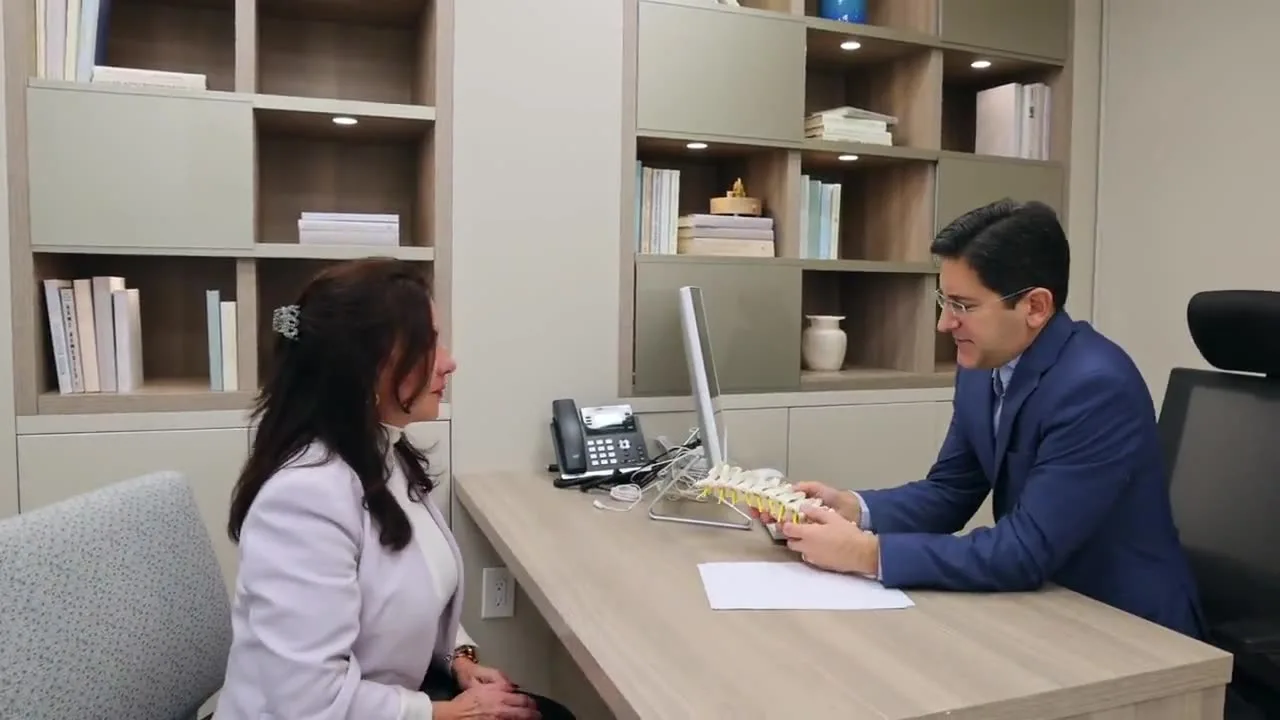
Watch this educational video to learn about sciatica, how it develops from nerve compression, and how it may affect your daily life.
Causes
As sciatica results from compression of the nerves running through the leg, the conditions that cause sciatica can be grouped into that cause compression at the root, where the nerve leaves the spine and those that cause compression further down the leg. The former is significantly more common, accounting for over 85% of cases, and includes (2):
- Lumbar Disc Herniation (with nerve root compression)*
- Lumbar Spinal Stenosis
- Spondylolisthesis
Compression in the leg is much less common than compression at the nerve root and typically results from either trauma (direct injury to the nerve) or, more rarely, piriformis syndrome, involving direct compression from the piriformis muscle.
Symptoms
As sciatica often accompanies injury or damage to the spine, back pain is the most common symptom associated with sciatica. Notably, back pain is not required for a diagnosis of sciatica and is not the only associated symptom. Other common symptoms that accompany sciatica include:
- Decreased strength or muscle coordination in one or both legs
- Pain worsening with cough/laugh/strain
- Numbness or tingling in the leg or foot
Though the exact sensation of sciatica may vary day to day, patients noting the following should immediately seek care from a healthcare professional:
- Worsening numbness, tingling, or weakness in the affected leg
- Loss of bowel/bladder control
Treatment Options
The vast majority of cases of sciatica resolve without intervention, with approximately 87% of patients reporting that their symptoms go away after 2 weeks without treatment (3). For those whose pain does not resolve on its own, conservative treatment with physical therapy, non-steroidal anti-inflammatory drugs (NSAIDs), and activity as tolerated will typically be pursued for 6-8 weeks in the absence of "red flag" symptoms. Though sometimes used, acetaminophen has limited evidence for use in sciatica and associated conditions. Other supportive treatments, including chiropractic manipulation and acupuncture, have been frequently used for a myriad of reasons including sciatica though do not have specific evidence for their benefit in this condition (2,3)
For patients with symptoms that persist despite conservative management, epidural steroid injections may provide some pain relief but do not address the underlying cause of pain. Surgery may be pursued for those with progressive weakness or numbness to protect from long-term consequences of nerve compression. Patients with persistent sciatica should discuss available treatment options with a licensed medical professional to determine how to best address their pain.
When to See a Spine Surgeon
A spine surgeon can provide helpful guidance when considering surgical management of sciatica and related conditions. Consultation with a spine surgeon is typically only necessary in the case of severe, persistent sciatica with progressive changes in strength or sensation. Otherwise, sciatica can frequently be managed by a primary care physician in consultation with experts on the spine and nervous system.
Herniated Disc
Learn about herniated discs, one of the most common causes of sciatica and how disc problems can lead to nerve compression.
Sources
- https://pubmed.ncbi.nlm.nih.gov/17704089/
- https://www.nejm.org/doi/full/10.1056/NEJMra1410151?utm_source=openevidence
- https://pubmed.ncbi.nlm.nih.gov/20227645/
Ready to Discuss Your Condition?
Contact our team to schedule a consultation and learn more about treatment options tailored to your needs.
Individual patient results vary. This information is educational and not a substitute for professional medical advice.