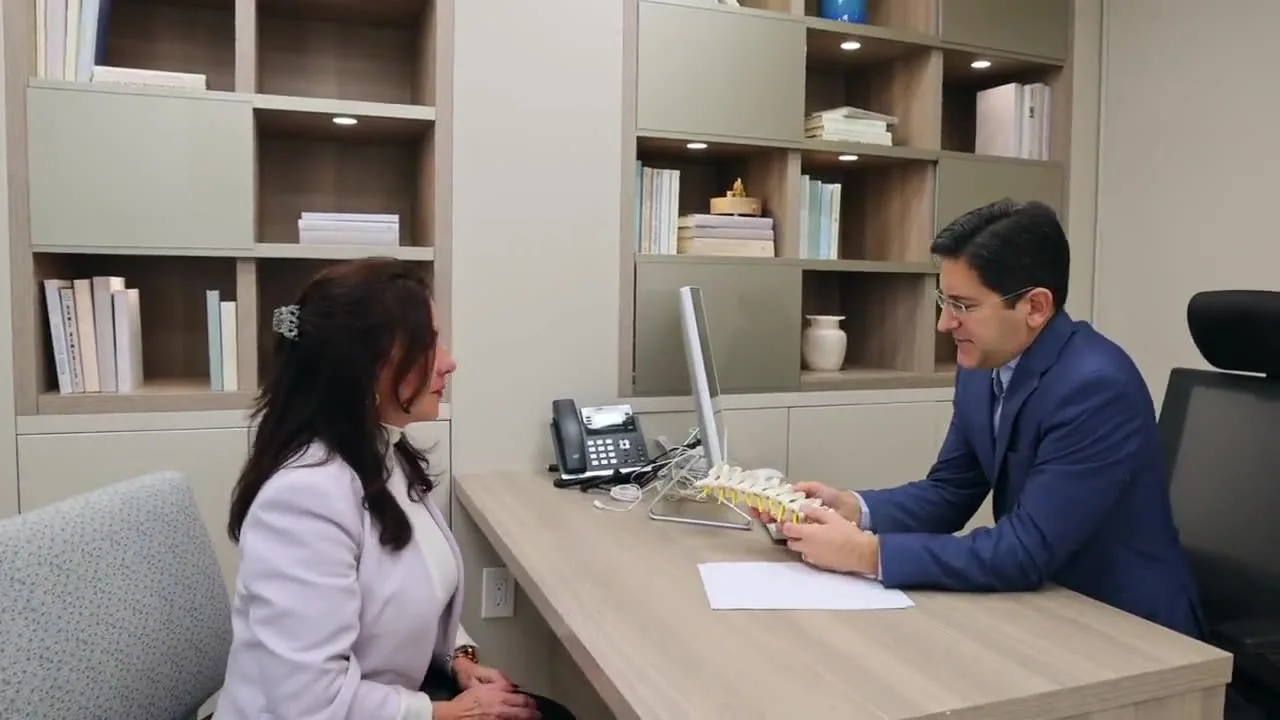
Endoscopic Spine Surgery
Learn about endoscopic spine surgery including conditions treated, benefits over traditional surgery, risks, and recovery expectations.
Endoscopic Spine Surgery: Ultra-Minimally Invasive Spine Treatment
Introduction
Spine surgeons have many different techniques they can choose from when approaching operations. Endoscopic techniques have risen in popularity in the last 20 years, with some studies reporting up to a 21-fold increase in use from 2000 to 2021 (1). Endoscopy involves the use of small cameras ("scopes") that surgeons use to see inside ("endo-") the spine, neck, and back with smaller incisions than traditional surgery. This article is designed to provide information for those considering endoscopic spine surgery and discusses conditions commonly treated with endoscopic approaches, benefits of endoscopy, and risks associated with these procedures. Each patient and their illness is unique, and you should discuss your specific needs with a licensed healthcare professional.
Micro Endoscopic Discectomy (Lumbar Spine)
Watch this educational video to learn how endoscopic access is used for lumbar discectomy through small incisions.
Conditions Treated
Endoscopic approaches were first introduced in spine surgery to treat intervertebral disc herniation, though their use has expanded significantly over the past two decades (2). Other conditions treated with endoscopy include (2,3):
- Spinal Stenosis
- Degenerative Spondylolisthesis
- Cervical Radiculopathy and Myelopathy
- Thoracic Spine Pathology
- Spinal Tumors
- Traumatic Injury to the Spine
Benefits
Endoscopic approaches, when chosen for the right patient, can have benefits with respect to safety, recovery time, and patient outcomes.
Safety
Endoscopic surgery reduced perioperative (around the surgery) and postoperative (after the surgery) infection rates, one of the more common and challenging complications in traditional open surgery (4).
Recovery Time
Endoscopic procedures allow for smaller incisions with shorter healing time, allowing patients to get back to things they care about sooner (5).
Outcomes
Primary surgical outcomes for endoscopic procedures are as good or better than traditional procedures with regard to long-term function and pain. Cosmetic outcomes (how the back looks after it heals) are even better for endoscopic procedures (5).
Important
Endoscopic approaches have made surgery for larger patients safer in that they mitigate the historical difficulties with getting to the spine through open approaches. Some surgeons may be comfortable operating on patients using endoscopy who they previously would not have seen as appropriate candidates for open spine surgery (3).
Risks
Many of the risks with endoscopic surgery are present with all spine surgery techniques, including issues with persistent pain, infection, or decreased mobility after surgery. Nonetheless, endoscopic procedures do come with some unique risks, including:
- Challenges with visibility for individuals with complex (atypical) spine anatomy
- Increased exposure to radiation before and during surgery
If you are considering endoscopic spine surgery, you should discuss your options with a licensed surgeon. Each person (and each spine) is unique– your physician can best answer questions and provide guidance regarding what procedure is right for you and what other factors you should consider before you undergo any procedure. Your physician can also provide tailored guidance to support you in recovery and reduce the risks associated with endoscopic procedures.
Anterior Endoscopic Cervical Microdiscectomy
Learn how an anterior endoscopic approach can be used for cervical microdiscectomy when disc disease affects the neck.
Citations
- https://pubmed.ncbi.nlm.nih.gov/36442782/
- https://pubmed.ncbi.nlm.nih.gov/40653021/
- https://pubmed.ncbi.nlm.nih.gov/40578443/
- https://pubmed.ncbi.nlm.nih.gov/38892919/
- https://pubmed.ncbi.nlm.nih.gov/33348526/
- https://pubmed.ncbi.nlm.nih.gov/38610887/
Interested in This Treatment?
Contact our team to schedule a consultation and learn more about whether this treatment may be appropriate for you.
Individual patient results vary. No outcome is guaranteed. This information is educational and not a substitute for professional medical advice.