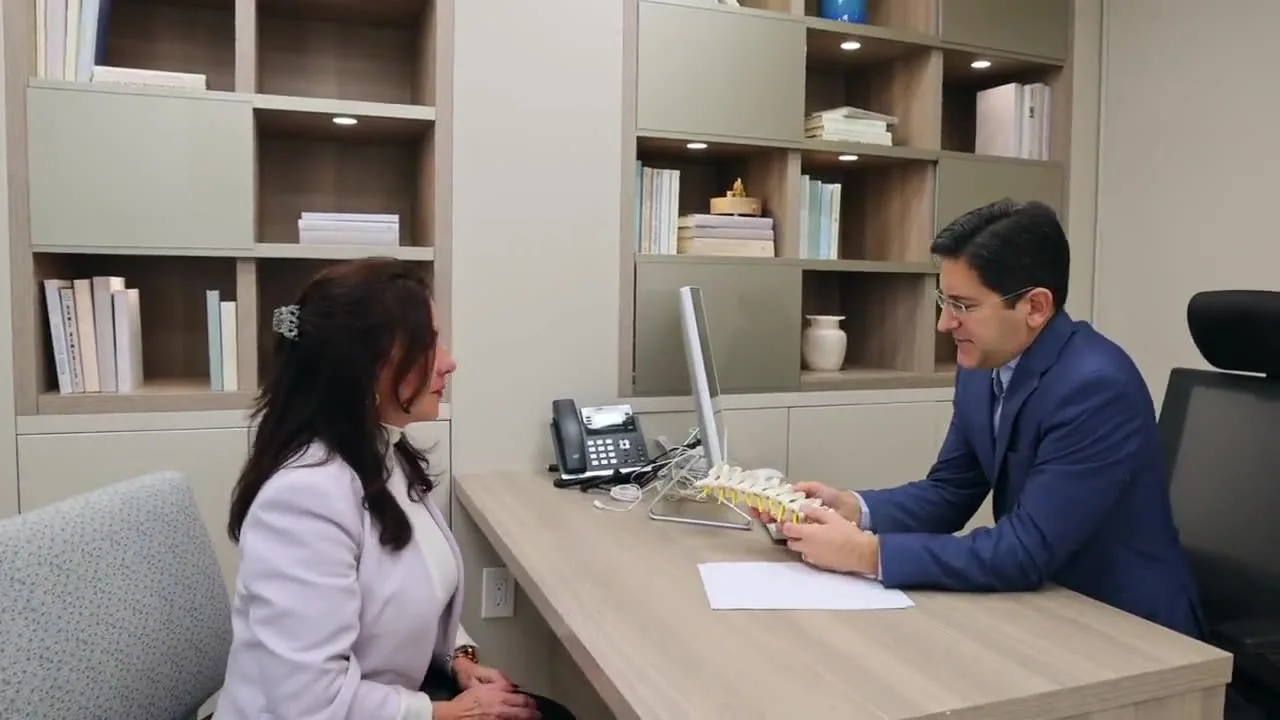
Lumbar Microdiscectomy
Learn about lumbar microdiscectomy including surgical techniques using high-powered cameras and recovery expectations for herniated disc treatment.
Lumbar Microdiscectomy: Herniated Disc Surgery, Technique, and Recovery
Introduction
Spine surgeons have many different techniques they can choose from when approaching operations for herniated discs in the lumbar (lower) spine. Microdiscectomy encompasses a variety of techniques that use high powered cameras, including microscopes and endoscopes, to reduce the size of incisions needed to operate. This article is designed to provide information for those considering microdiscectomy and discusses techniques used and expectations for recovery. Each patient and their illness is unique, and you should discuss your specific needs with a licensed healthcare professional.
Lumbar Disc Microsurgery
Watch this educational video to learn how microsurgical techniques are used to treat lumbar disc herniation.
Techniques
Microdiscectomy refers to a variety of techniques that use cameras to reduce the need for the larger incisions involved in traditional, open spine surgery. Through the use of high-powered cameras, surgeons are able to approach the surgical site through the muscle, allowing for smaller incisions and shorter recovery times compared to traditional methods (1). Some of the approaches included under the umbrella of microdiscectomy include (2):
Open microdiscectomy
Open microdiscectomy uses a high-powered digital microscope to allow surgeons to view spinal anatomy through a small incision. This technique allows for smaller incisions than traditional open methods due to the use of a microscope, though it continues to use traditional surgical scalpels (blades) to separate muscles and allow surgeons to access the spine
Tubular microdiscectomy
Tubular microdiscectomy involves similar techniques for enhancing surgeon vision through small incisions used in open microdiscectomy. The main difference between tubular and open methods is that tubular methods use an inflatable tubular retractor to help separate tissue layers, allowing surgeons to simultaneously use both hands to operate on the spine.
Endoscopic microdiscectomy
Endoscopy involves the use of small cameras ("scopes") that surgeons use to see inside ("endo-") the spine, neck, and back with smaller incisions than traditional surgery. Sometimes endoscopic techniques are included under the umbrella of microdiscectomy procedures as they similarly allow for smaller incisions and shorter recovery times, though they use different types of cameras and have other uses. For more information on endoscopic techniques, see our article discussing endoscopic spine surgery.
Recovery
Shorter recovery times, further boosted by lower complication rates, are often the primary driver for surgeons and patients to elect microdiscectomy over traditional methods. Most people undergoing lumbar microdiscectomy are discharged from the hospital the same day as their surgery (1). On average, patients are able to return to work eleven days after microdiscectomy procedures. In one case series with no activity restrictions post-operatively, one third of patients returned to work within one week and 97% returned to work within eight weeks (3).
Micro Endoscopic Discectomy (Lumbar Spine)
Learn about micro endoscopic discectomy in the lumbar spine, a minimally invasive option for disc-related nerve compression.
Citations
- https://pubmed.ncbi.nlm.nih.gov/35843537/
- https://pubmed.ncbi.nlm.nih.gov/28760036/
- https://www.nejm.org/doi/full/10.1056/NEJMcp1512658?utm_source=openevidence
Interested in This Treatment?
Contact our team to schedule a consultation and learn more about whether this treatment may be appropriate for you.
Individual patient results vary. No outcome is guaranteed. This information is educational and not a substitute for professional medical advice.