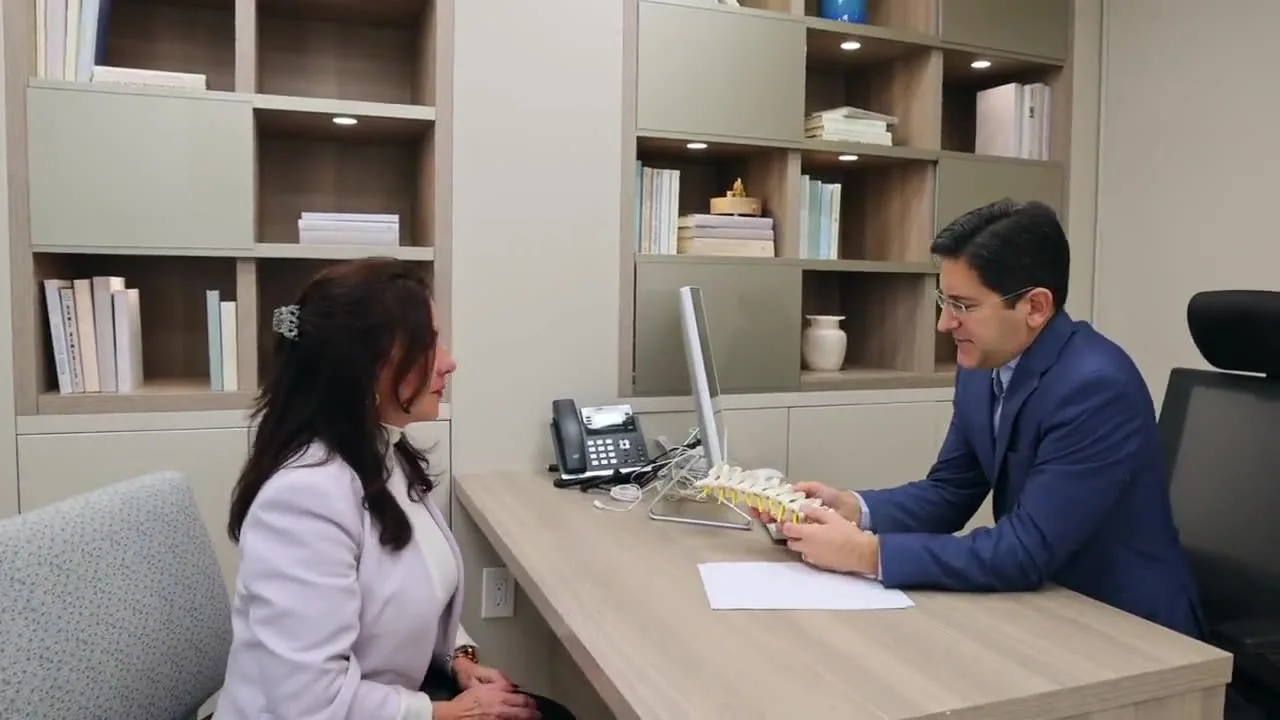
Lumbar Spine Fusion
Comprehensive guide to lumbar spine fusion covering surgical techniques, recovery timeline, and what to expect for lower back fusion procedures.
Lumbar Spine Fusion: Lower Back Fusion Surgery & What to Expect
Introduction
Spine fusion has become increasingly popular in the United States, with elective lumbar (lower) fusion procedures rising over 60% from 2004 to 2015 (1). Despite surgeons' growing use of this procedure, up to 40% of patients do not receive adequate preoperative counseling informing them of their options for surgery and the specific risks and benefits to spine fusion for their case (2). This article discusses some of the common techniques for Lumbar Spine Fusion along with expectations for recovery. Each case is unique, and if you are considering a spine fusion procedure, you should discuss your particular concerns with a licensed healthcare provider.
Spinal Fusion (Lumbar)
Watch this educational video for an overview of lumbar spinal fusion and how it stabilizes the lower spine.
Techniques
Surgeons can take a variety of approaches to spine fusion, broadly divided between traditional ("open") approaches and minimally invasive techniques. Lumbar (lower) spine fusion is typically completed with posterior/dorsal approaches (from the back), though anterior/ventral (from the front) techniques exist and have comparable outcomes to posterior surgery though with different complication risks. Given higher risks of mortality and higher costs associated with anterior techniques, posterior approaches are often first-line options, with anterior surgery reserved for situations where specific advantages of anterior techniques would be beneficial (1).
Posterior Lumbar Interbody Fusion (PLIF)
PLIF is the most traditional approach. It is an open technique where surgeons access the spine region of interest directly from the back. PLIF allows for the most rapid spinal cord decompression as it allows surgeons to use direct decompression techniques (2).
Transforaminal Lumbar Interbody Fusion (TLIF)
TLIF is an open approach where surgeons access the spine region of interest from the back, though it involves a more lateral approach to the spine itself. It can also be performed with minimally invasive techniques, where it is referred to as MIS-TLIF. TLIF shows the lowest complication rates of all major techniques for lumbar spinal decompression, with lower rates of nerve injury, dural (spinal cavity lining) tears, and need for reoperation (3, 4).
Anterior Lumbar Interbody Fusion (ALIF)
ALIF is an evolved form of a technique for spine fusion first described in the 1930s. This technique is traditionally open and typically involves accessing the spine around the contents of the gut though the retroperitoneal space. ALIF tends to show improved rates of bony fusion at one year with additional advantages for ease of direct nerve decompression, though these techniques (5).
Minimally Invasive Surgery (MIS)
Minimally invasive surgical techniques use high powered cameras and machinery to reduce the need for large incisions and improve recovery time. They are often modeled off of or combined with strategies used for traditional, open approaches to fusion surgery. Most often, minimally invasive techniques are combined with TLIF in a procedure referred to as MIS-TLIF (TLIF using endoscopy or other high powered cameras). If you are curious about specific minimally invasive techniques, you should discuss available options with an expert in spine surgery.
Recovery Timeline
Recovery following spine fusion varies depending on the surgery performed, the spine operated on, and the person undergoing surgery. Nonetheless, patients undergoing fusion procedures can expect gradual recovery lasting months to a year (6). In general, patients undergoing minimally invasive surgery have shorter hospital stays than those receiving open surgery. Early mobilization begins shortly after release from the hospital, with rigorous physical therapy often needed to ensure maximum return to mobility and function (7). Typically, patients receiving posterior surgery report improvements faster than those undergoing anterior fusion. 80% of individuals receiving MIS-TLIF will experience maximum improvement of subjective markers by six months after their operation (8). Patients undergoing ALIF will more often have continued improvements up to one year post-operatively, though over half will experience maximum recovery in the first six months (9).
TLIF: Transforaminal Lumbar Interbody Fusion
Learn how TLIF accesses the spine from the back to place an interbody graft and support fusion in the lumbar region.
Citations
- https://pubmed.ncbi.nlm.nih.gov/40402235/
- https://pubmed.ncbi.nlm.nih.gov/40982640/
- https://pubmed.ncbi.nlm.nih.gov/31658581/
- https://pubmed.ncbi.nlm.nih.gov/26126415/
- https://pubmed.ncbi.nlm.nih.gov/28647584/
- https://pubmed.ncbi.nlm.nih.gov/23334400/
- https://pubmed.ncbi.nlm.nih.gov/35871660/
- https://pubmed.ncbi.nlm.nih.gov/38708966/
- https://pubmed.ncbi.nlm.nih.gov/40648771/
Interested in This Treatment?
Contact our team to schedule a consultation and learn more about whether this treatment may be appropriate for you.
Individual patient results vary. No outcome is guaranteed. This information is educational and not a substitute for professional medical advice.