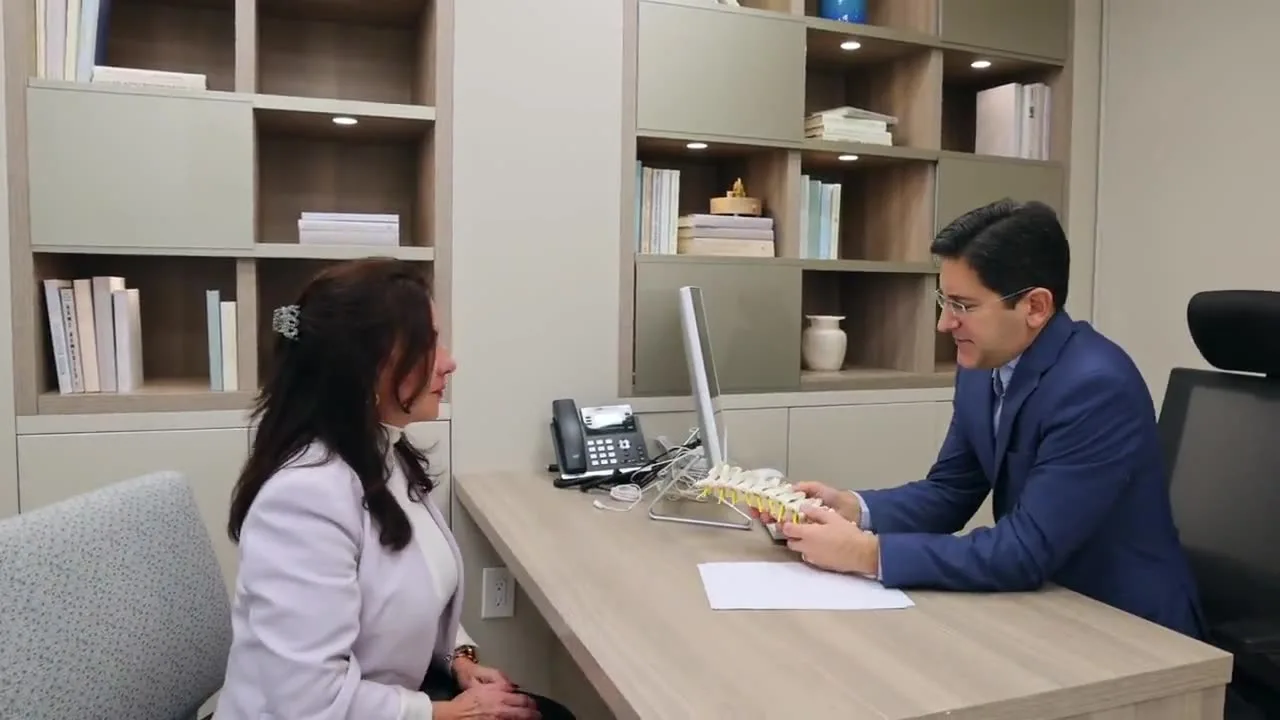
Minimally Invasive Spine Surgery
Learn about minimally invasive spine surgery including benefits, risks, recovery process, and conditions treated with MISS techniques.
Minimally Invasive Spine Surgery: Benefits, Risks, & Recovery
Introduction
Minimally Invasive Spine Surgery (MISS) encompasses a range of procedures that use modern techniques to minimize disturbance to surrounding tissues and reduce recovery time compared to traditional methods. Many of these techniques use small cameras and other specialized instruments to allow surgeons to see parts of the body that would have previously required open surgery, which involves large incisions through and around critical structures in the neck, back, and chest. This article provides an overview of Minimally Invasive Spine Surgery, outlining conditions treated with MISS, common MISS procedures, benefits to minimally invasive techniques, risks associated with these procedures, and recovery expectations following Minimally Invasive Spine Surgery.
Minimally-Invasive TLIF (Transforaminal Lumbar Interbody Fusion)
Watch this educational video to learn about minimally-invasive TLIF, a modern fusion technique that offers reduced recovery time compared to traditional approaches.
Conditions Treated
Minimally invasive techniques can be used in a variety of configurations for diseases of the spine. Some of the conditions most frequently treated with MISS include (1):
- Disc herniation
- Degenerative disc disease
- Spondylolisthesis
- Select cases of spinal trauma and tumors
Notably, patient selection for MISS is critical. Individuals with more complex distortion of the spine may benefit more from other options.
Common MISS Procedures
Some of the most common Minimally Invasive Spine Surgeries include:
- Microdiscectomy
- Minimally Invasive Decompression
- Minimally Invasive Transforaminal lumbar Interbody Fusion (MI-TLIF)
- Endoscopic Discectomy
Benefits
Minimally Invasive Spine Surgery can have many benefits for appropriate patients, particularly compared to traditional, open approaches. Clinical evidence suggests that the use of minimally invasive techniques results in reduced blood loss, shorter hospital stays, lower complications rates, faster recovery, and less postoperative pain compared to traditional techniques (3, 4), though it is crucial to note that these findings reflect patterns noted across the range of minimally invasive techniques used and conditions treated.
Risks
Though minimally invasive techniques have many advantages, particularly when compared to traditional methods, some risks remain for these procedures, including (2):
- Need for reoperation
- Worsening symptoms despite surgery
- Re-emergence of treated disease (particularly in the case of disc herniation)
Recovery
Recovery following minimally invasive surgery is notably faster than from traditional spine surgery, though patients still may require time to return to full activities. Some patients may be appropriate for same day discharge following their operations, while others may need more time in the hospital to recover initially. Following discharge, many patients are able to return to activities like driving as soon as two weeks after surgery. Over 80% of patients will return to work following minimally invasive spine surgery, typically after 11-24 days of out of work recovery (3). Notably, each case and patient are unique, and those receiving minimally invasive spine surgery should follow the guidance of their surgeons and clinical support team to ensure efficient and smooth recovery. Following spine surgery, patients may require additional support, like physical therapy or pain control. Again, your physician can provide the best guidance for your specific care needs.
Micro Endoscopic Discectomy
Learn about micro endoscopic discectomy in the lumbar spine, a minimally invasive procedure to treat disc herniations.
Citations
- https://pubmed.ncbi.nlm.nih.gov/35729823/
- https://pubmed.ncbi.nlm.nih.gov/36510616/
- https://pubmed.ncbi.nlm.nih.gov/35843537/
- https://pubmed.ncbi.nlm.nih.gov/35871660/
Interested in This Treatment?
Contact our team to schedule a consultation and learn more about whether this treatment may be appropriate for you.
Individual patient results vary. No outcome is guaranteed. This information is educational and not a substitute for professional medical advice.