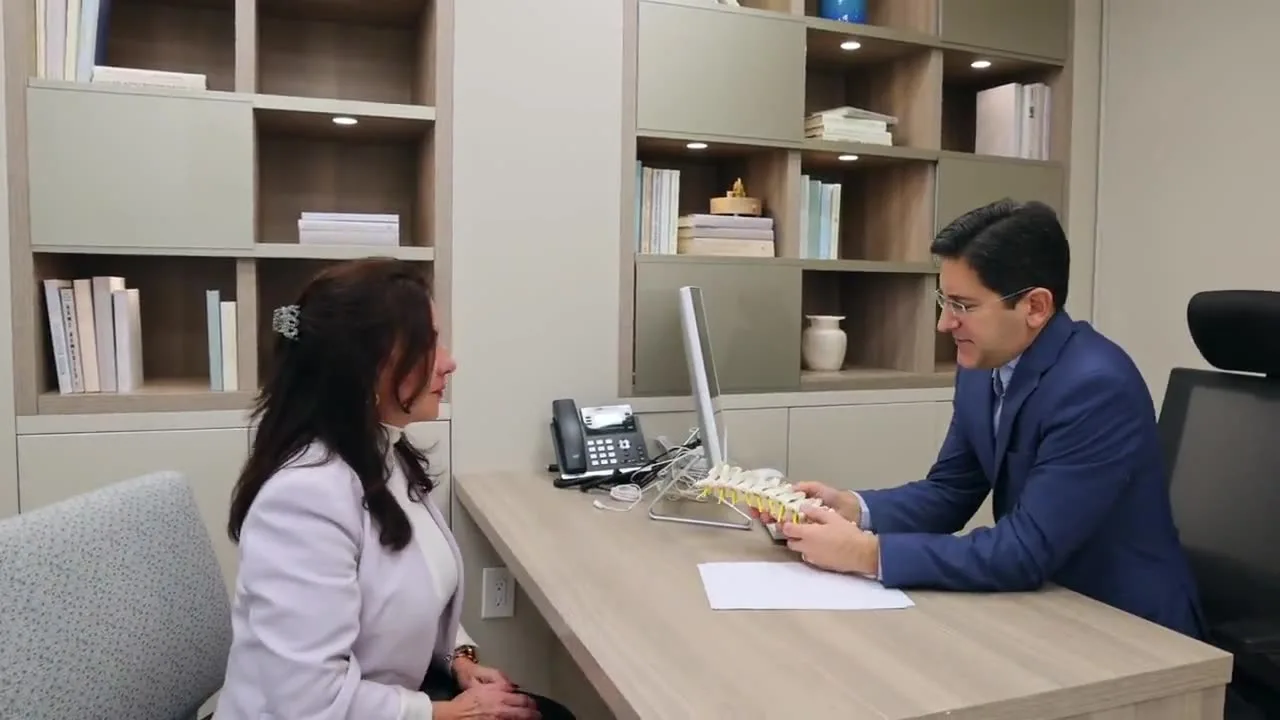
Spine Surgery
Comprehensive guide to spine surgery including types, risks, recovery process, and when surgery may be recommended for back pain treatment.
Spine Surgery: Types, Risks, Recovery & When Surgery Is Recommended
Introduction
Though many patients with back pain benefit significantly from conservative treatment with physical therapy and occasional medication use, some patients have conditions causing their back pain that do not respond to non-surgical treatment. The specific type of surgeries recommended often depend on the patient and condition at hand, and patients with back pain that is not responsive to rest, physical therapy, and over-the-counter pain medications may benefit from further testing and, in some cases, surgery to help relieve their pain (1). This article discusses some of the common types of spine surgery, their risks, and the path to recovery following spine surgery. It will also outline when surgery may be recommended, though if you believe you may be in need of spine surgery, you should seek help from a licensed physician.
Anatomy of the Spine
Watch this educational video to learn about the anatomy of the spine and how its structures work together.
Approaches
Historically, spine surgery requires large open incisions with long recovery times and higher risks for patients. Modern approaches emphasize minimizing the risk of surgery by leveraging advances in imaging technology, robotics, and other pieces of evolving medical technology. The following are some of the most common, cutting-edge techniques available to maximize the benefits of spine surgery:
- Minimally Invasive Spine Surgery
- Endoscopic Spine Surgery
Procedures
The procedures below are some of the more commonly completed spine surgeries. Click the name of each to learn more about the procedure.
- Microdiscectomy
- Spine Fusion
- Cervical Spine Fusion
- Lumbar Spine Fusion
- Cervical Disc Replacement
- Lumbar Disc Replacement
- Anterior Cervical Discectomy and Fusion-- ACDF
Risks
Though spine surgery can be life-changing for some patients, for others, surgery comes with complications or limited benefit. If you are considering spine surgery, you should consult with a licensed spine surgeon to discuss how these risks apply to you and your body.
Some of the more common risks of back surgery include:
- Persistent pain following surgery (in 10-40% of patients) (1)
- Increased rates of reoperation
- Wound-related complications
- Infections
Rare but severe complications can include:
- Post-operative bleeding (requiring transfusion)
- New neurologic deficits (numbness or weakness)
- Blood clots
- Cardiac events
Recovery
Recovery can vary significantly depending on the patient and particular surgery performed, however newer, minimally invasive procedures tend to have shorter recovery periods than older, open procedures. While traditional spinal fusion surgery can require recovery times of greater than four months (2), patients receiving minimally invasive lumbar laminectomy have average recovery times as short as fourteen days (3).
Modern recovery protocols rely on many tools, though key principles are as follows (4):
- Multimodal pain control (emphasizing the limitation of opioid use)
- Early mobilization and physical therapy initiation
- Transexamic Acid to reduce bleeding
- Antiemetics to manage nausea
- Early discontinuation of urinary catheter use
When Surgery is Recommended
Spine surgery may be an appropriate option for patients with back pain who have not improved with conservative treatment measures like physical therapy and pain medications. Typically, patients with non-specific back pain without signs of nerve compression.
Patients with radicular symptoms, involving pain, numbness, weakness, or decreased reflexes in an arm or leg, often have compression around the spinal nerve root and as such may benefit from surgery.
Patients with myelopathic symptoms, including loss of coordination, loss of bowel/bladder control, or more generalized limb weakness, often have compression of the spinal cord itself and may benefit from surgery to decrease pressure on the cord.
Laminectomy Procedure
Learn about laminectomy, a common spine surgery procedure used to relieve pressure on the spinal cord or nerves.
Citations
- https://pubmed.ncbi.nlm.nih.gov/34115979/
- https://pubmed.ncbi.nlm.nih.gov/34560636/
- http://pubmed.ncbi.nlm.nih.gov/35867600/
- https://pubmed.ncbi.nlm.nih.gov/38358272/
Interested in This Treatment?
Contact our team to schedule a consultation and learn more about whether this treatment may be appropriate for you.
Individual patient results vary. No outcome is guaranteed. This information is educational and not a substitute for professional medical advice.